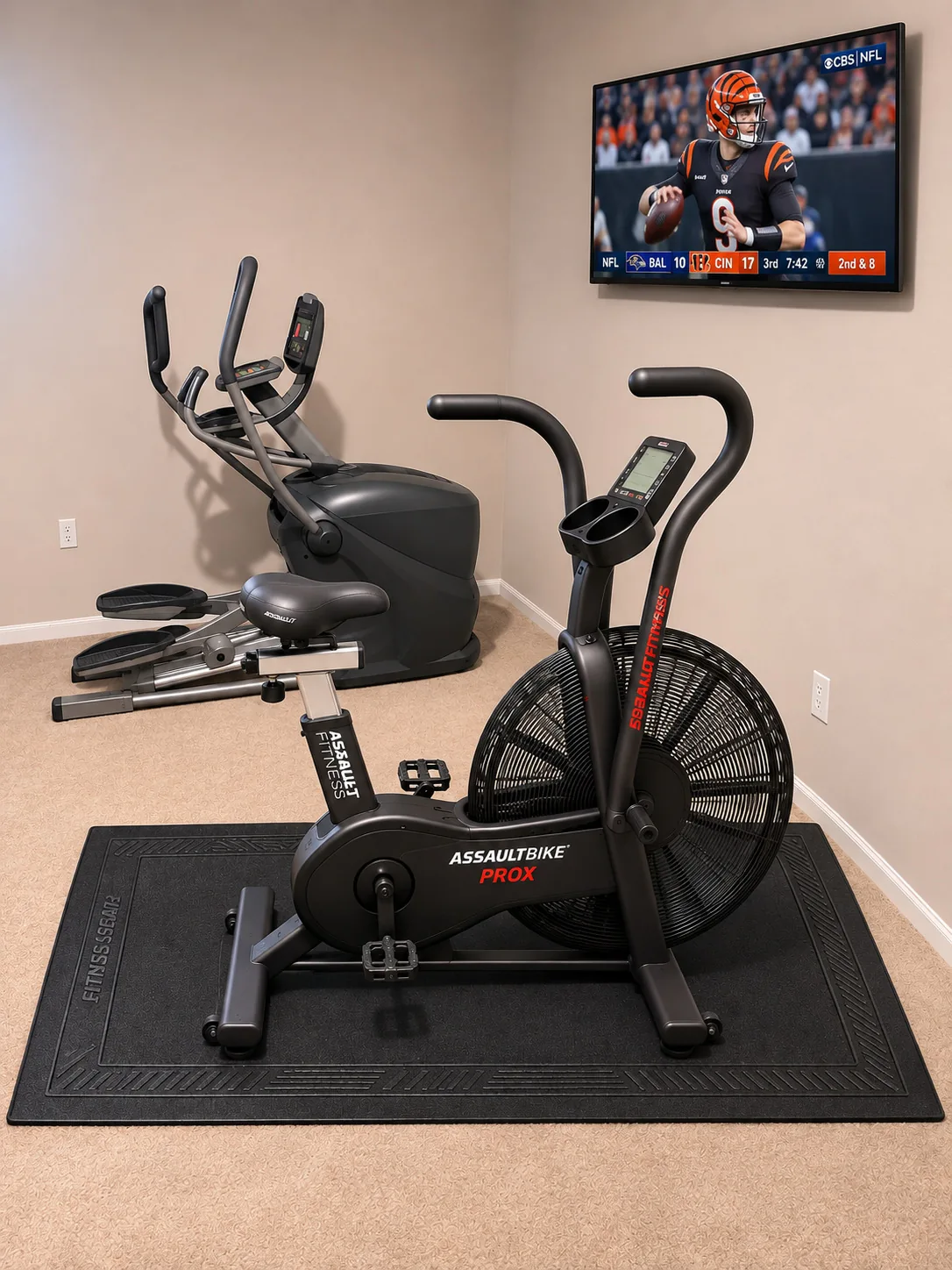
I had years of health and fitness data. What I didn't have was a good way to bring it all together, understand what it was telling me, and use it to make better decisions.
The Problem Wasn't a Lack of Data
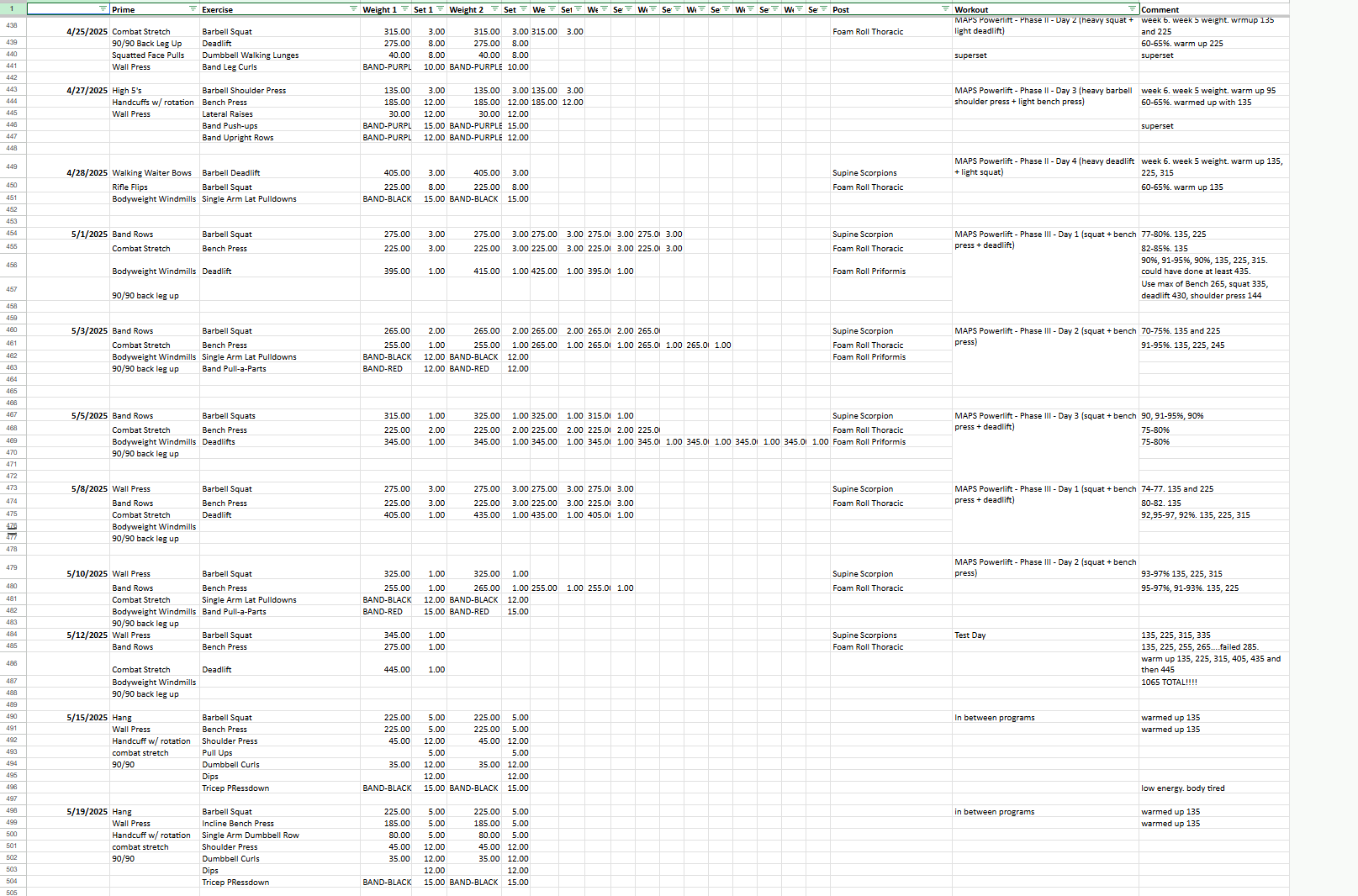
Over the years, I've accumulated a lot of information about my health and fitness. I've tracked my workouts consistently since 2018: exercises, sets, reps, weights, and progress through different training programs. My Apple Watch collects data on my activity, cardiovascular fitness, sleep, and workout sessions. I also have lab results, genetic information, medications, and supplements.
The problem was that I looked at all of it in silos. My workout history lived in a spreadsheet, health trends in Apple Health, and lab results somewhere else. Each source told me something, but none gave me the bigger picture. I had plenty of charts and metrics, but very little analysis and almost no meaningful recommendations.
So I started wondering what might be possible if I brought it all together. Could AI find patterns I was missing? Could it help me understand how different parts of my health and fitness were influencing each other? Could it give me something actionable instead of more numbers? I didn't know what the results would look like, but I wanted to find out. That's what led me to build Health Review.
Years of data, stored separately.
My original workout spreadsheet captured the details, but it could not connect training history with the rest of my health data.
Starting Small and Letting It Evolve
I approached Health Review the way I've approached a lot of software over my career: start with a real problem and an imperfect understanding of it, then learn as you go. The earliest version used Google Apps Scripts to consolidate Apple Health data into Google Sheets and experiment with AI-generated reviews. That first approach sent raw spreadsheet data to the model. I later rebuilt it as a local Node.js application backed by SQLite, calculating metrics in code before asking AI to interpret them.
Getting the data in turned out to be its own challenge. Workout logs were structured differently from Apple Health data, lab results came from other sources, and medications, supplements, and goals each needed their own way of being recorded. Today, Apple Health data arrives through Health Auto Export on the iPhone, using authenticated HTTPS submissions. Workout information can be read from Google Sheets, imported from Excel, or entered manually. Those options work, but simplifying setup and ongoing imports is still one of my biggest priorities. It reinforced something I've learned many times: integrating systems and information is often harder than building the features that use them.
Over time, Health Review grew into a multiuser application hosted on AWS, with broader reporting and AI assisted reviews. Production now runs on EC2 with PostgreSQL on Amazon RDS, while the code is being moved incrementally from JavaScript to strict TypeScript. But the most important work wasn't adding features or changing technologies. It was refining how the application prepares information for AI, improving prompts, evaluating the output, and figuring out what actually makes an insight useful. Some approaches worked. Others didn't.
When AI Started Connecting the Dots
It didn't happen overnight, but as the application matured, I started getting insights I wouldn't have caught on my own. The weekly AI generated health review has become one of my favorite features. It pulls together information from different sources and highlights trends, good and bad, that deserve attention.
Not another dashboard. A weekly interpretation.
This example from the fictional demo brings together training, cardio, and recovery, then suggests what to focus on next.
This week at a glance
Barbell curls: Progressing in the 6–12 rep range, up 7% on estimated best.
Training: Four of four lifting days matched the planned program.
Cardio: 232 minutes across six sessions, above the usual 189.
Next steps
Keep the current training phase on schedule and consider the Program Advisor's recommendation when the block ends.
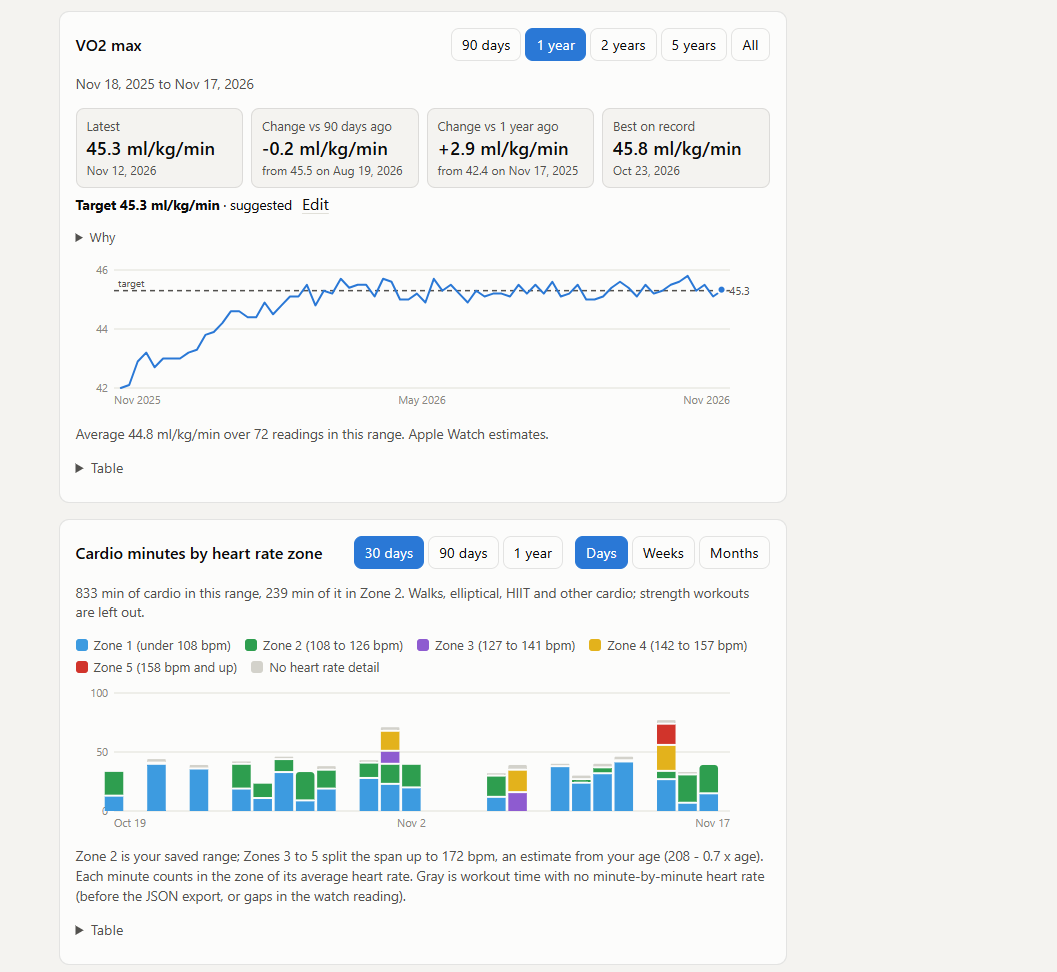
The clearest example was VO₂ max, a measure of cardiovascular fitness. My Apple Watch had been tracking an estimate for years, but I wasn't paying much attention to it. Health Review made it clear that my estimate was below where I wanted it to be for my age. That's now something I'm actively working to improve.
It has also helped me understand how training stress, work, and everyday life add up. I enjoy hard workouts, but I've become more aware of how those demands accumulate, and the stress of a job search recently added another layer. Seeing those factors alongside my training and health data has helped me think more carefully about recovery, energy, and when to push harder or ease off.
And because I've logged workouts for years, Health Review lets me look at training volume across days, weeks, months, and programs. That helps when choosing what fits my life at the moment: a demanding strength program when things are predictable, or something with a lighter or shorter schedule when life gets busy. I'm making those decisions with my own history rather than general advice.
The real value isn't that AI tells me what to do. It's that it helps me notice things, ask better questions, and make more informed decisions.
From Understanding My Training to Choosing What's Next
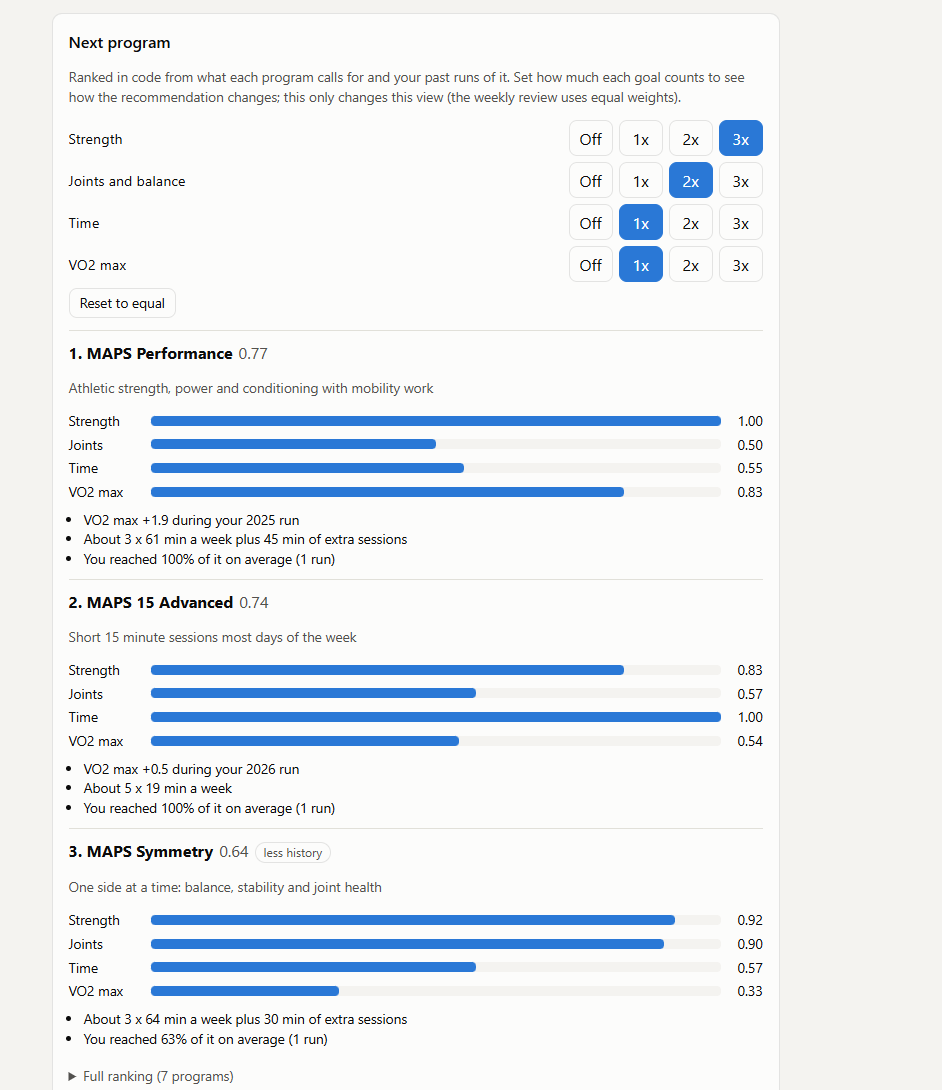
One of the areas I'm most interested in right now is helping Health Review recommend my next training program. I've completed a wide variety of MAPS programs from Mind Pump Media, and choosing the next one has usually come down to my goals, what I just finished, and what sounded interesting. Now I'm experimenting with a more data informed approach.
The Program Advisor evaluates programs against four goals: building strength, improving joint health and balance, fitting my available time, and supporting cardiovascular fitness. Where there's enough history, it uses my actual results, including strength progression, changes in estimated VO₂ max, session length, and how consistently I completed each program. I can also change how much each goal counts. Since Health Review flagged my VO₂ max, I can give cardiovascular fitness more weight, and when life gets busy, I can emphasize time.
AI doesn't rank the programs. The application calculates the scores and the ranking, and AI helps explain the result. That's intentional. I want recommendations based on criteria I can inspect, test, and improve, not on a model's judgment.
Using it has already exposed problems I wouldn't have predicted. An early version compared strength across different rep ranges, so lighter, higher rep work could make progress look like regression. I changed it to compare performance within the same rep range. Another issue let a program that scored very poorly on one of my goals still rank first overall, so I adjusted the scoring. I expect to keep finding issues like these. The scores reflect criteria I chose and what my historical data can tell me, not a proven prediction of which program will produce the best results. I don't treat its recommendations as definitive. But it's an interesting next step: using my own history and priorities to decide what to do next.
Reports, AI, and Knowing Which Does What
Not everything needs AI. Some of the most useful parts of Health Review simply bring information together and make it easy to explore: daily, weekly, and monthly training volume, individual exercises, strength progression, where I am in my current program, and how today compares with earlier periods. After years of logging workouts, having that history organized is valuable on its own.
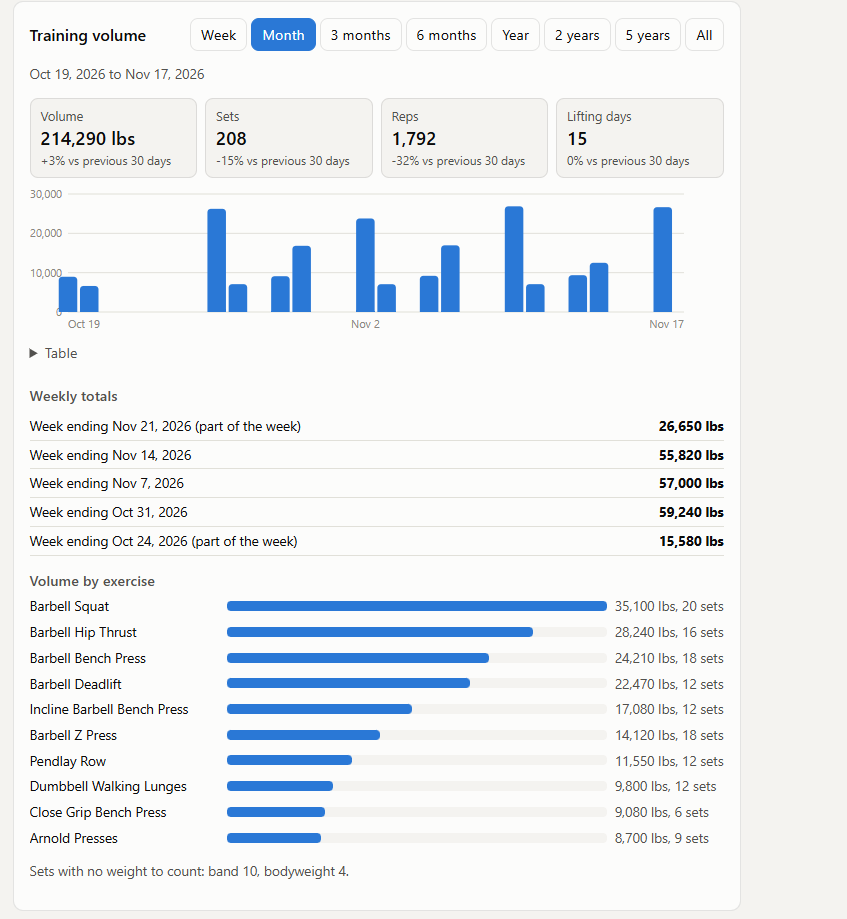
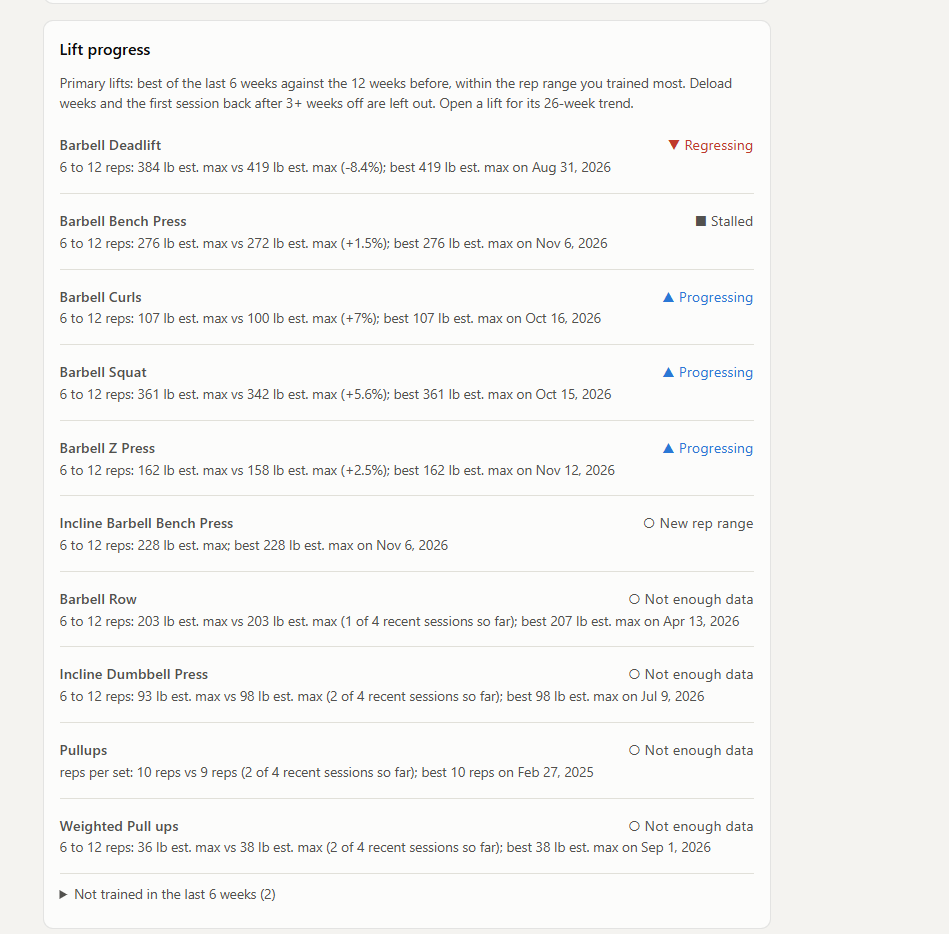
That split reflects how I think about AI in applications generally. Just because AI can do something doesn’t mean it should. Calculating training volume, comparing historical performance, and ranking programs need consistent, testable results, so they belong in code. AI is better at interpretation: explaining trends, pointing out possible relationships, and making results easier to understand. The weekly review works the same way. The application computes the numbers, AI writes about them, and automated checks flag any number in the review that doesn’t match the underlying data. I wrote more about that design in When Building Gets Easy, Deciding What Not to Build Becomes the Job.
None of that makes the AI analysis always right. It still takes judgment, testing, and ongoing refinement. But separating calculation from interpretation gives me more confidence in the results and makes it much easier to see where something needs to improve.
Code calculates. AI interprets. People decide.
Privacy Matters When the Information Is Personal
Bringing health information together creates real responsibility, and my years in healthcare technology shaped how I approached it from the start. User data is never sold or used for advertising.
Users sign in with Google, using only basic profile permissions, and I approve every account. Access to personal data is restricted to the signed-in user, with separate administrative and operator access. The server's disk is encrypted, off-server backups are encrypted before upload, and a user's Claude API key is stored encrypted and never displayed again after it's entered, not even to me.
AI is used only when enabled for a user, either with their own Claude API key or an administrator-provided key with a monthly usage limit, and what's sent is computed summaries of their data, such as averages, changes, and statuses, plus their own notes. Raw health exports are never sent. The Next program chat, for example, doesn't send medications, labs, or genetics for program recommendations. Information already sent to Claude is subject to Anthropic's API data-handling and retention terms. Users can export their data, pause their account, or request account deletion from Settings, or from the sign-in page if their access has ended. The public demo uses only fictional data.
Deleting an account removes its active database records, but copies can remain temporarily: pre-update database copies on the encrypted server disk for up to 14 days, Amazon-managed encrypted disk snapshots for 7 days, and separately encrypted off-server backups for roughly two months. Access-request and deletion-notice emails containing names and email addresses may also remain in my mailbox. These distinctions matter, especially when working with sensitive information.
These decisions don't eliminate every risk, and protecting sensitive information takes continued attention. I also want to be clear about what Health Review is for. It isn't meant to diagnose anything or replace healthcare professionals. It helps me organize information, understand trends, and identify questions worth discussing with my physician.
Building for Myself, Then Thinking About Others
Health Review began as something for myself, not a commercial product. As it evolved, I started thinking about how others might benefit, which led to multiuser support, access by request with my approval, and a public demo with fictional data. It's free and available to people in the United States. Like Job Hunt, Health Review lets users bring their own Claude API key and pay Anthropic directly. I can also make administrator-provided AI access available within a monthly usage cap. Those limits help keep the application free while controlling ongoing costs.
Expanding beyond myself raised new questions. What makes sense after years of tracking workouts may not be intuitive to someone new. What should they enter first? How do I help them set goals and import their data easily? And how do I keep the application useful without overwhelming people with metrics, reports, and options? These are product and user experience problems as much as technical ones.
Where I Want to Take It
I have plenty of ideas, but I'm trying to focus on the ones that add the most value. The biggest is making it easier to get information in, especially Apple Health and workout data. Health Auto Export and the current workout import options work, but they still require some setup. A native iPhone app that connects directly to Apple Health, with the user's permission, is a longer-term possibility, once I have the equipment to build and test it. I also want better onboarding, so new users can set goals and start getting value without learning everything the application can do.
Beyond that, I want to keep testing the Program Advisor and learn whether its recommendations actually lead to better decisions, and keep improving the weekly reviews with clearer explanations, stronger validation, and better connections between trends and practical next steps. I don't have every feature mapped out, and that's intentional. I'd rather keep using it and improve it based on real needs than build features simply because I can.
Building Something I Wanted to Use
I don't expect AI to have all the answers. But bringing the right information together, asking better questions, and continually refining how I use it has already made that information far more valuable. What started as an experiment to better understand my own health has become an ongoing exercise in learning, problem-solving, and building something genuinely useful.
If you're interested in exploring what I've built, you can try the Health Review public demo, which uses fictional data. And if you’re interested in the fitness journey that helped inspire it, you can read Stronger at 51.