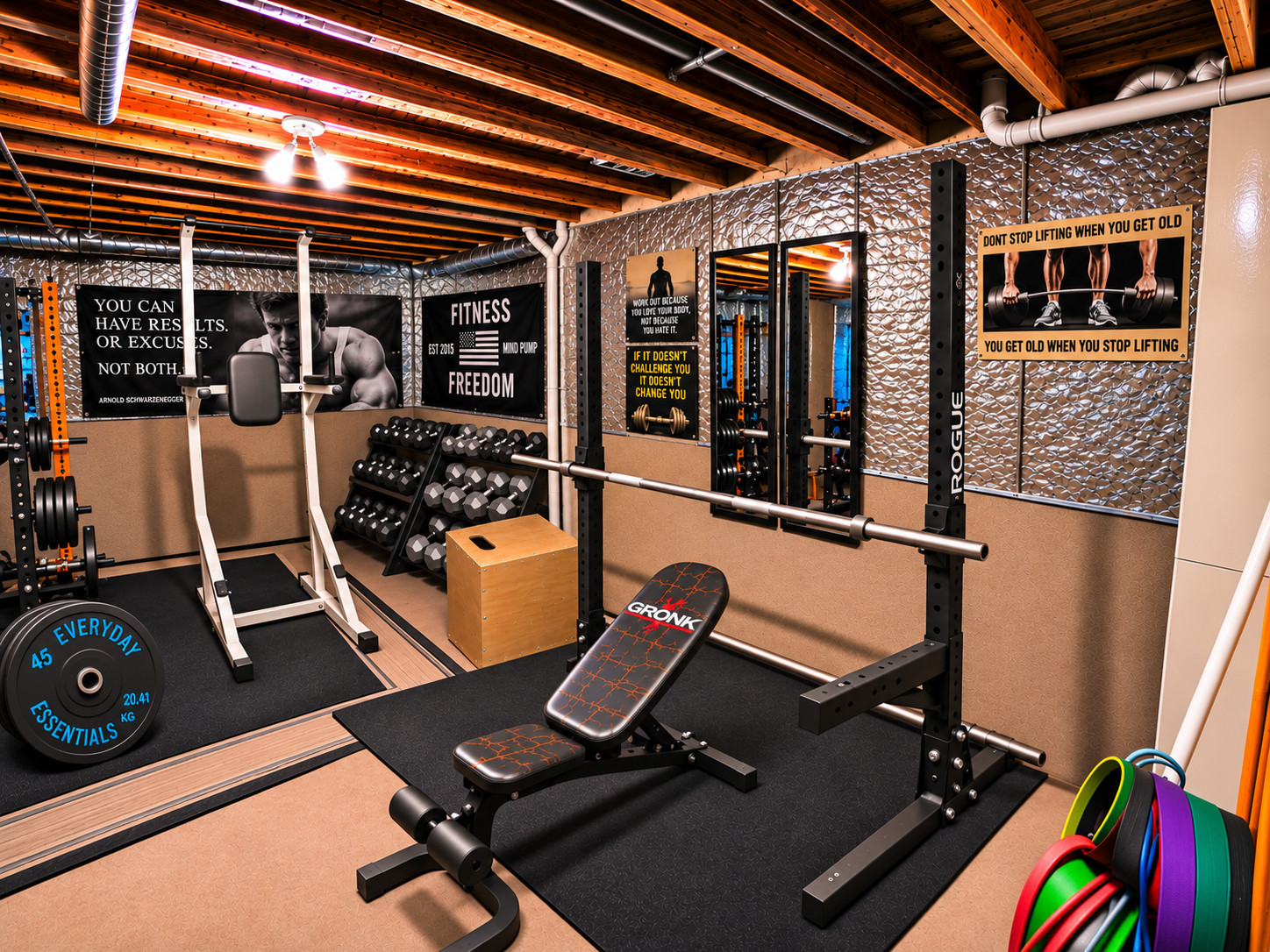
I'm 51 years old, and I'm the strongest I've ever been. I'm still getting stronger.
I also feel better than I did in my 30s. Back then, I wasn't working out much, my kids were young, and I was grinding at work, burning the midnight oil on all fronts. Making time to train and take care of my health has made a bigger difference than I ever expected.
That doesn't mean I'm in perfect shape. I still have weight I'd like to lose, areas of my health to improve, and plenty left to learn. But I'm proud of the progress I've made, not just physically, but in how I think about health and taking care of myself. It's been a journey of experimentation, setbacks, and continuous improvement, and I don't see it ending anytime soon.
Finding Something That Worked for Me
I've been active at different points in my life, but for a long time my approach wasn't consistent or well-rounded. Like a lot of people, I'd get motivated, start a routine, and eventually drift away from it. I tried running, but injuries made it hard to sustain. In my early to mid-40s, I tried bootcamp-style workouts. They were challenging and certainly made me sweat, but I was constantly dealing with injuries, and I eventually realized the group setting wasn't my thing.
I also lifted weights, but my approach was pretty typical. I focused on my upper body, and when I trained legs, I mostly used machines like the leg press. I had never done a barbell back squat or a barbell deadlift. Today, they're probably my two favorite exercises.
Discovering Mind Pump in 2018
In 2018, I discovered Mind Pump, a fitness podcast that changed how I think about strength training. What hooked me was that the hosts explained the reasoning behind what they recommended: programming, exercise selection, progression, recovery, and building strength over time. I liked understanding not just what to do, but why. It appealed to the same curiosity that drives me everywhere else.
I started following their MAPS training programs, and something clicked. I was getting stronger, learning new movements, and feeling better about myself. More importantly, I was enjoying the process. For the first time, I'd found an approach I could see myself following for years, and that's exactly what happened.
Why Variety Has Kept Me Motivated
Over the years, I've completed a wide range of MAPS programs, including Anabolic, Anabolic Advanced, Aesthetic, Performance, Powerlift, Split, and Symmetry. I rarely repeat a program right after finishing it. I'd rather pick one that challenges me differently or emphasizes what the last one didn't.
Symmetry, for example, emphasizes unilateral training and includes a 5x5 strength phase, which challenges me in ways a barbell-focused program doesn't. Each program has a purpose, and by the time I finish one, I'm usually excited to tackle the next.
The variety has also made me more well-rounded. Instead of focusing mostly on my upper body, I'm building strength, mobility, and stability across my whole body. These days, I train almost entirely with free weights and compound lifts in my home gym. I don't have weight machines there, though I'll use them when traveling or when they're the best option available.
At 51, two of my favorite exercises are ones I'd never even tried before I turned 43.
A Goal of 1,000 Pounds
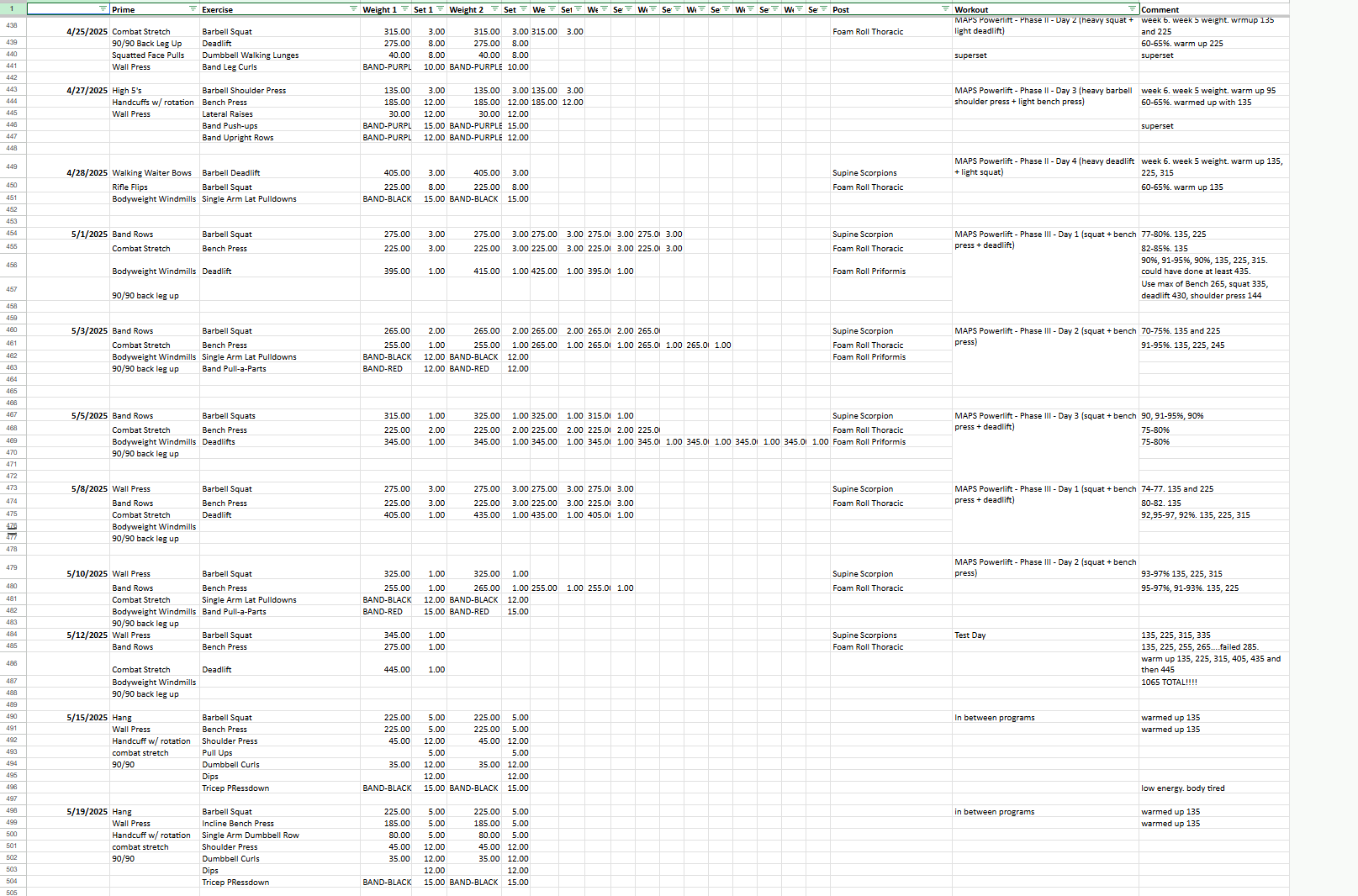
One of my favorite accomplishments came in May 2025, at the end of another round of MAPS Powerlift, which I started after finishing Symmetry. I'd set a goal of a combined 1,000 pounds across the three major lifts. On May 12, 2025, I tested it:
| Lift | Weight |
|---|---|
| Barbell back squat | 345 lbs |
| Bench press | 275 lbs |
| Deadlift | 445 lbs |
| Total | 1,065 lbs |
I beat my goal by 65 pounds. What made it satisfying wasn't just the number. It was years of consistent training, different programs, better technique, and steady progress coming together on one day.
I honestly believe I could have lifted more. But I didn't need to. I'd done what I set out to do, and pushing further would have added injury risk for very little benefit. At this point in my life, I care more about being able to keep training than about proving what I can lift on a particular day.
Learning to Train Smarter
That decision reflects one of the biggest changes in how I train: more isn't always better. I still love a hard workout. But some days I feel great and can push, and other days stress, poor sleep, soreness, or an injury mean adjusting. I've learned that making those adjustments isn't a lack of discipline. It's part of being consistent.
When something hurts, I try to understand why instead of ignoring it, and then I change the exercise, reduce the intensity, or take more time to recover. The goal isn't to win every workout. It's to keep showing up, keep making progress, and stay healthy enough to continue.
Mobility Changed More Than I Expected
Mind Pump's MAPS Prime program significantly improved my mobility and completely changed how I warm up. I used to think of a warmup as getting my heart rate up or doing a few lighter sets. Now I'm much more intentional about figuring out what needs attention and preparing my body for the movements ahead. That has helped me move better, train more effectively, and prevent or minimize injuries. Mobility isn't the most exciting part of a workout, but it contributes to everything else.
Building More Than Physical Strength
Strength training challenges me mentally as much as physically. Working toward a weight you’ve never lifted, grinding through a tough set, or pushing through a day when everything feels heavier than it should builds patience, discipline, and persistence. And once you’ve done something you weren’t sure you could do, you approach the next challenge with a little more confidence.
I’ve spent the past 20 years in startups and smaller companies, where difficult problems, limited resources, and uncertainty are part of the job. You don’t always know how you’ll accomplish something when you start. You have to understand the problem, figure out an approach, make adjustments, and keep moving forward. Strength training reinforces that same mindset. It doesn’t mean blindly pushing harder. Sometimes progress means changing your approach, getting help, or recognizing that what you’re doing isn’t working.
In both the gym and my career, some of the most rewarding experiences have come from accomplishing things I wasn’t sure were possible.
Cardio, Nutrition, and the Work Still Ahead
Strength is only part of the picture. I walk regularly and do cardio, including the elliptical and intervals on an assault bike, because I want to keep my cardiovascular fitness, mobility, and endurance so I can enjoy an active life.
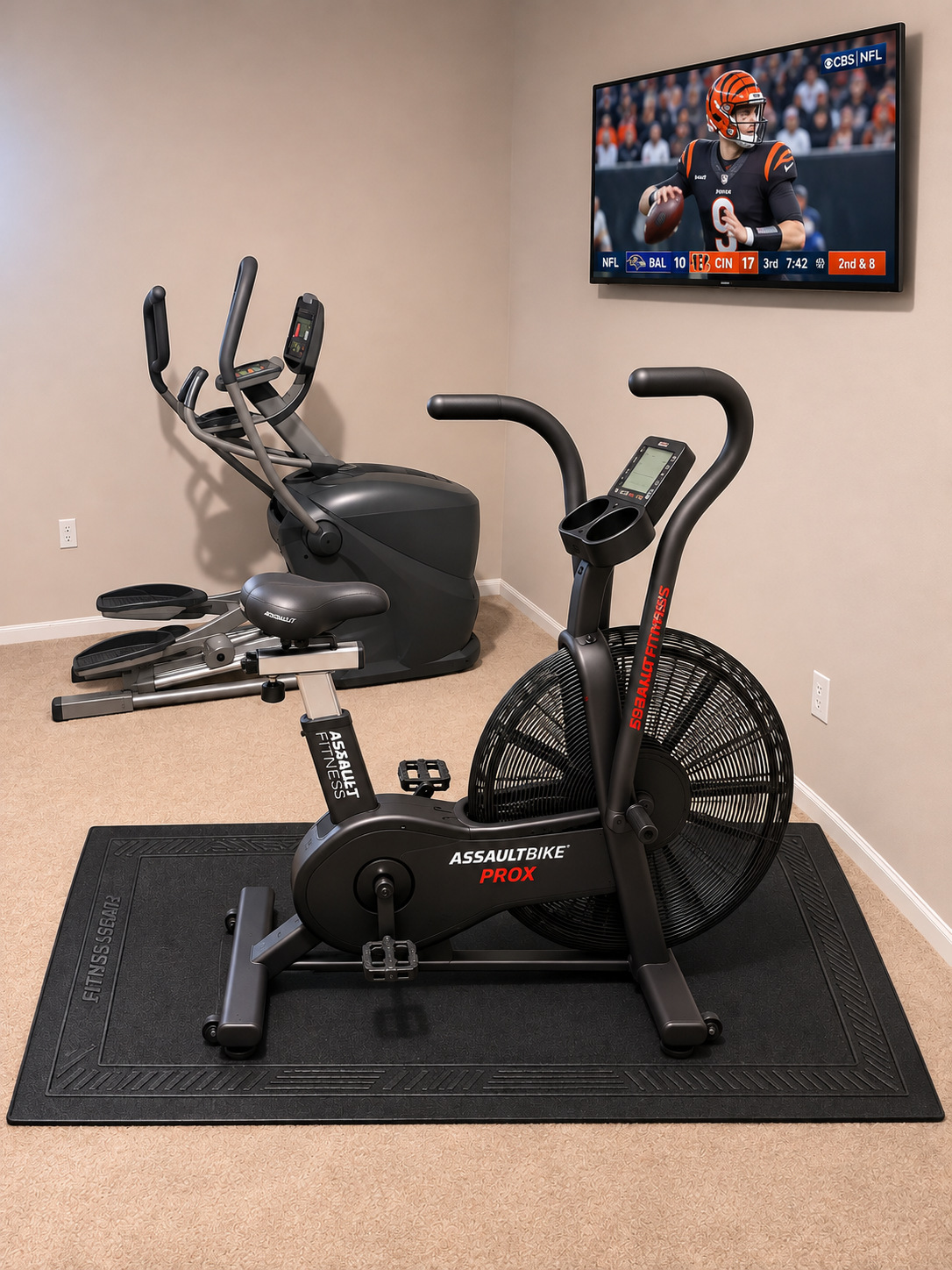
Nutrition is where I have the most room to improve. I'm stronger than I've ever been, but I still carry more weight than I'd like, and I want to lose body fat while keeping the strength and muscle I've built. I've become more intentional about protein, food choices, and how nutrition supports my training. But knowing what to do and consistently doing it are two different things, and I won't pretend I've mastered it. I enjoy food, I enjoy cooking, and like most people, I have to balance my goals with everyday life. What I'm working on is habits I can maintain, not short-term results.
My Family Is a Big Part of Why I Do This
My family is a huge part of why I take care of myself. I want to be healthy, active, and present for them for as long as possible, with the energy to enjoy life together and be around for everything still ahead. I enjoy getting stronger and seeing progress in the gym. But I'm not training just to lift heavier weights. I'm investing in my ability to live the life I want, with the people who matter most to me.
Turning Curiosity Into Something Useful
Over the years, I’ve accumulated a lot of information about my health and fitness: years of workout logs, Apple Health data, cardiovascular trends, laboratory results, genetic information, medications, and supplements. But with it scattered across different applications, spreadsheets, and reports, it was hard to see the bigger picture.
I wanted to understand how the pieces fit together. What patterns was I missing? How were my training, nutrition, recovery, and other habits affecting my progress? What questions should I be asking my physician? That curiosity led me to build Health Review, a personal application that uses AI to help organize and analyze my health and fitness information.
It’s still evolving, and I’ll share more about why I built it, what I’ve learned, and where I want to take it in a separate article. In the meantime, you can explore the Health Review demo, which uses fictional data.
Read more about the application in Why I Built Health Review.
Resources That Have Influenced My Approach
I've learned a lot through experimentation, but I've also benefited from people who have spent years studying, coaching, and explaining health and fitness. A few have been particularly influential:
Mind Pump Media: the podcast and MAPS programs that have structured my training since 2018. I have no affiliation with them. I'm just a longtime listener and customer.
The Resistance Training Revolution by Sal Di Stefano: a strong case for building muscle and strength as part of long-term health, rather than treating exercise mainly as a way to burn calories.
Bigger Leaner Stronger by Michael Matthews: a straightforward guide to building muscle, getting stronger, and improving body composition without getting lost in fitness trends and conflicting advice.
These are personal recommendations. Everyone's goals and circumstances are different, and I don't believe one approach works best for everyone. You'll find more of the books I've recommended on my Books page, along with other programs and recommendations in the Resources section of my website.
The numbers matter. So does what comes next.
Training, learning, adjusting, and showing up consistently. That's the approach I want to keep building on.
Read why I built Health Review ↗Explore the demo ↗Stronger, but Still Learning
What I'm most proud of isn't a particular lift or a number on a scale. It's finding an approach to health and fitness that I enjoy, keep learning from, and can adapt as my life changes.
I still have goals I haven't reached, I still make mistakes, and I'm still figuring things out. But I feel better equipped to keep improving than I did when I was younger.
I'm 51, I'm the strongest I've ever been, and I'm not finished yet.